Mineral Complex
A Closer Look at Whole-Food Mineral Sources in the Daily Eating Pattern
Sebastian Marsden
·
Lean body support is not a singular practice. It emerges from the cumulative effect of consistent eating decisions over weeks and months — decisions about protein source, meal timing, and portion structure. For men maintaining an active routine, the question is not whether to prioritise protein, but which natural sources to build the daily eating pattern around, and how to structure those sources without arriving at a monotonous plate.
Published nutritional research on protein intake for active men has moved substantially in the past decade away from simple total-daily-intake recommendations toward a distribution model. The current evidence base suggests that spreading protein intake across three or four eating occasions — rather than concentrating it in one or two large meals — is associated with more consistent utilisation. The specific threshold varies by individual and activity level, but the distribution principle holds across the available research.
For whole-food natural sources, the distribution model translates to including a protein-bearing food at every main eating occasion. This does not require the same source at each meal — the variety within the category is broad enough to prevent the plate fatigue that is one of the documented reasons men abandon structured eating plans.
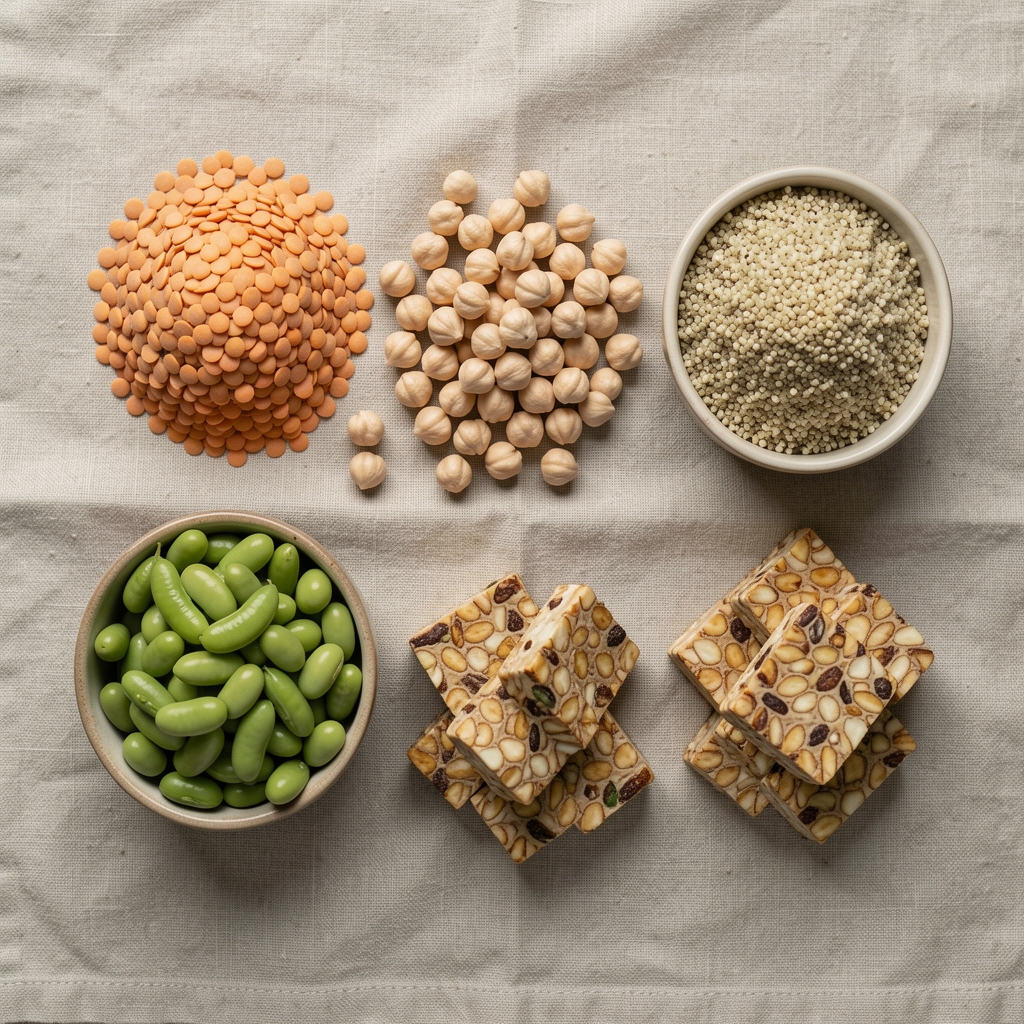
The Indonesian dietary context is particularly well-positioned for this approach. Tempeh — fermented soybean — carries approximately 19 g of protein per 100 g, along with a favourable amino acid profile that compares well to animal-source proteins in published analyses. Its fermentation process also provides incidental benefits for the digestive microenvironment, though this is a secondary consideration to the core protein contribution.
"Lean eating is a structural outcome rather than a product of specific ingredient magic. The structure is: protein at every occasion, variety across the week, and portion awareness without restriction."Tobias Ashcroft — Uldran Journal, January 2026
The plant protein category available to an active man in Indonesia covers a wide range. Beyond tempeh, the following sources represent a practical rotation that provides amino acid variety without requiring significant dietary reorganisation:
Rotating across this source list over a week provides amino acid variety without the repetition that commonly leads to eating plan abandonment. The practical structure is to assign no more than two consecutive meals the same source — a light constraint that naturally encourages diversity without requiring a rigid meal plan.
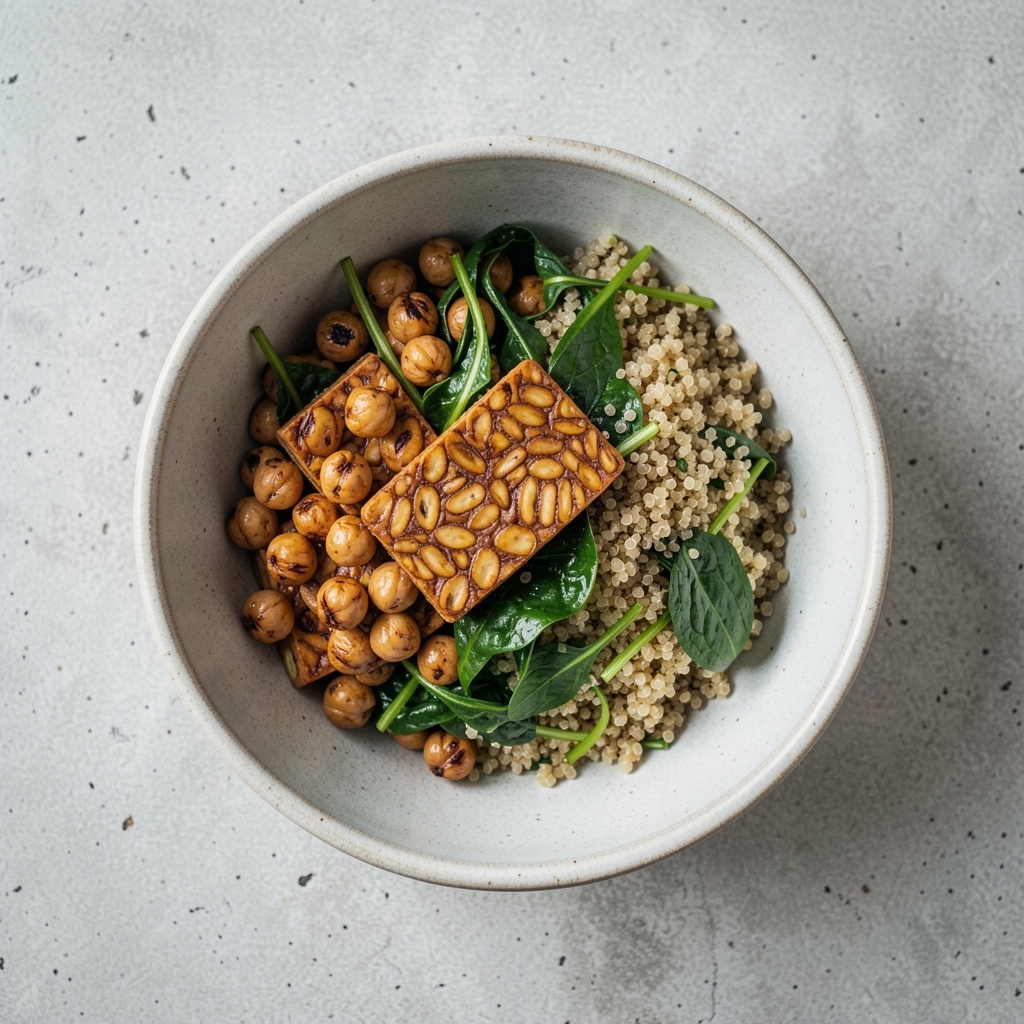
A protein-structured meal built around tempeh and chickpeas — whole-food sourcing without supplemental dependence.
Portion awareness is distinct from calorie counting. The distinction is practically important because the latter requires measurement infrastructure — apps, scales, tables — that most active men do not sustain over time. Portion awareness is a visual and habitual practice: the palm-size reference for protein, the half-plate guideline for vegetables, the thumb-size for fat-bearing additions like seeds or oil.
For active men, the lean body pattern that emerges from consistent portion awareness tends to organise around three structured meal occasions and one optional snack — a pattern that aligns with the protein distribution principle documented in the previous section. The snack occasion is the natural home for a protein-bearing whole food: a handful of edamame, a portion of Greek-style yoghurt (where dairy is included), or a small serving of roasted chickpeas.
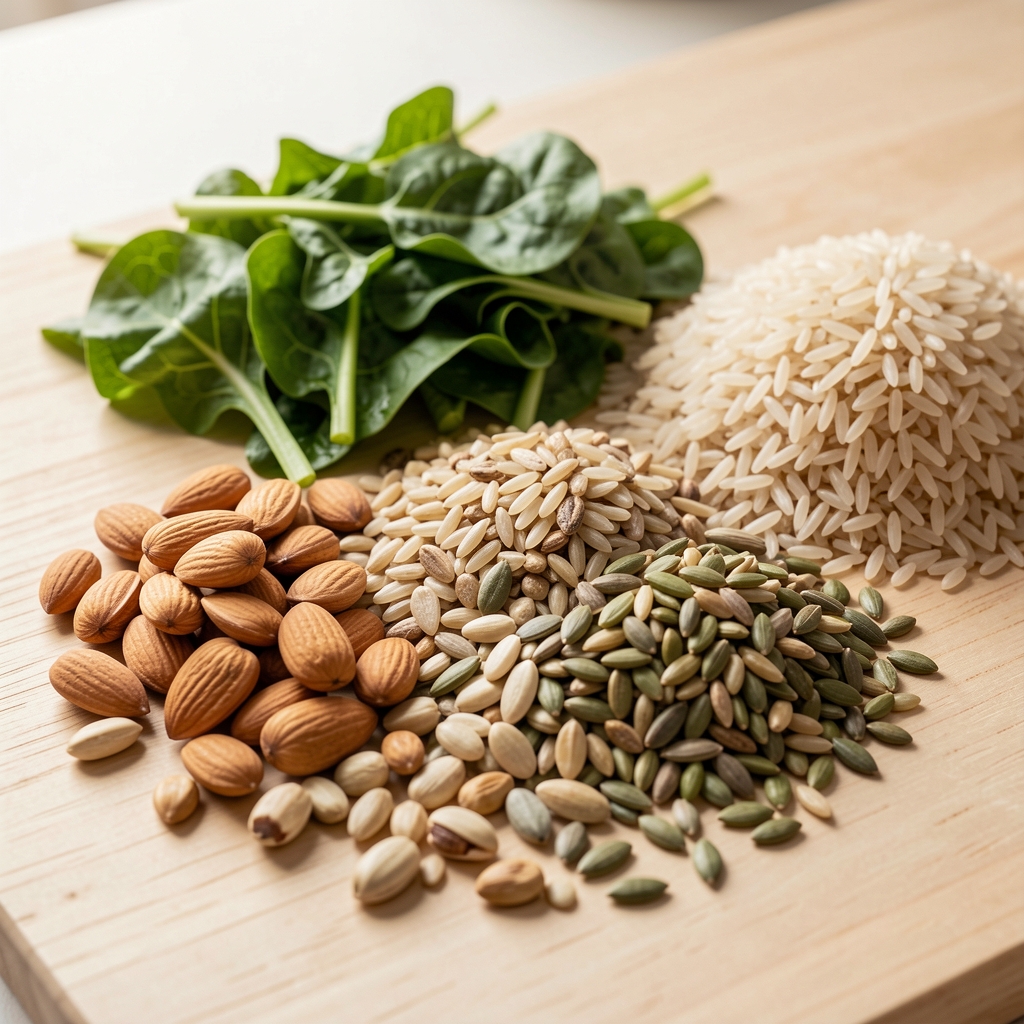
Protein supplementation via whole-food concentrate powders — pea protein, hemp seed protein, brown rice protein — is an extension of this structure rather than a replacement for it. The evidence base for whole-food concentrate supplementation is thinner than for isolated whey, but the functional contribution to daily protein total is meaningful for men whose food variety is temporarily limited. Third-party batch verification of protein content remains the evaluation standard Uldran Journal applies.
The post-activity eating window is a specific structural concern for active men. Published nutritional research has examined the timing of protein intake relative to physical activity for several decades, with the current position generally supporting a flexible window of two to three hours post-activity for whole-food protein sources — a more relaxed position than the earlier narrow-window hypothesis suggested.
For outdoor fitness activities — running, cycling, hiking, resistance training in outdoor environments — the practical implication is that the meal following activity is the priority protein occasion. Structuring this meal around a whole-food protein source that is both convenient and reliably available is an important practical element. In the Indonesian context, tempeh satay, edamame with brown rice, or a tofu-based preparation are all practical post-activity meal structures.
Active recovery — the broader period between activity sessions — is also supported by adequate protein intake, alongside hydration and sleep structure. The Uldran Journal editorial position on active recovery is to treat it as a composite practice, not a single-ingredient intervention. Articles covering sleep structure, hydration habits, and weekend reset practices will appear in forthcoming issues.
Protein supplementation via whole-food or plant-based concentrates is best evaluated as a structural supplement to a food-first approach — not as a foundation. For men whose daily eating pattern already includes three to four protein-bearing occasions from whole foods, an additional concentrate serves to close a gap during busy periods rather than to establish the baseline.
Active ingredients sourced from documented suppliers, with each batch accompanied by a certificate of composition, are the formulations that align with Uldran Journal's editorial sourcing standard. For protein concentrates specifically, the certificate should state the protein content per serving from an independent laboratory, and the sourcing facility should maintain food-grade processing conditions.
We recommend speaking with a qualified wellness or nutrition professional before introducing any new supplement routine to your daily eating, particularly if you have specific dietary requirements or health considerations that affect protein absorption. The editorial content above reflects Uldran Journal's review of published nutritional research, not a directive for individual practice.
Uldran Journal is an independent editorial publication focused on everyday wellness practices. The publication is not affiliated with any commercial, governmental, or institutional body. Content published here is selected based on published nutritional research and undergoes independent batch verification review for quality and labelling accuracy before editorial recommendation.

Tobias Ashcroft contributes to Uldran Journal from a background in active lifestyle documentation. His pieces focus on practical eating structure for men who combine demanding professional schedules with sustained physical activity. He writes from Jakarta, Indonesia.
More from this publication →