Daily Nutrition
Morning Routines and the Place of Adaptogen-Enriched Formulations
Harriet Linwood
·
·
10 min read
Dietary minerals are not the exclusive province of supplemental products. Across the daily eating pattern of an active man, a structured approach to whole-food ingredients can offer a substantial foundation for zinc, magnesium, and iron intake. This piece documents the sources, the quantities typically available through food, and the structural habits that make mineral intake more consistent over time.
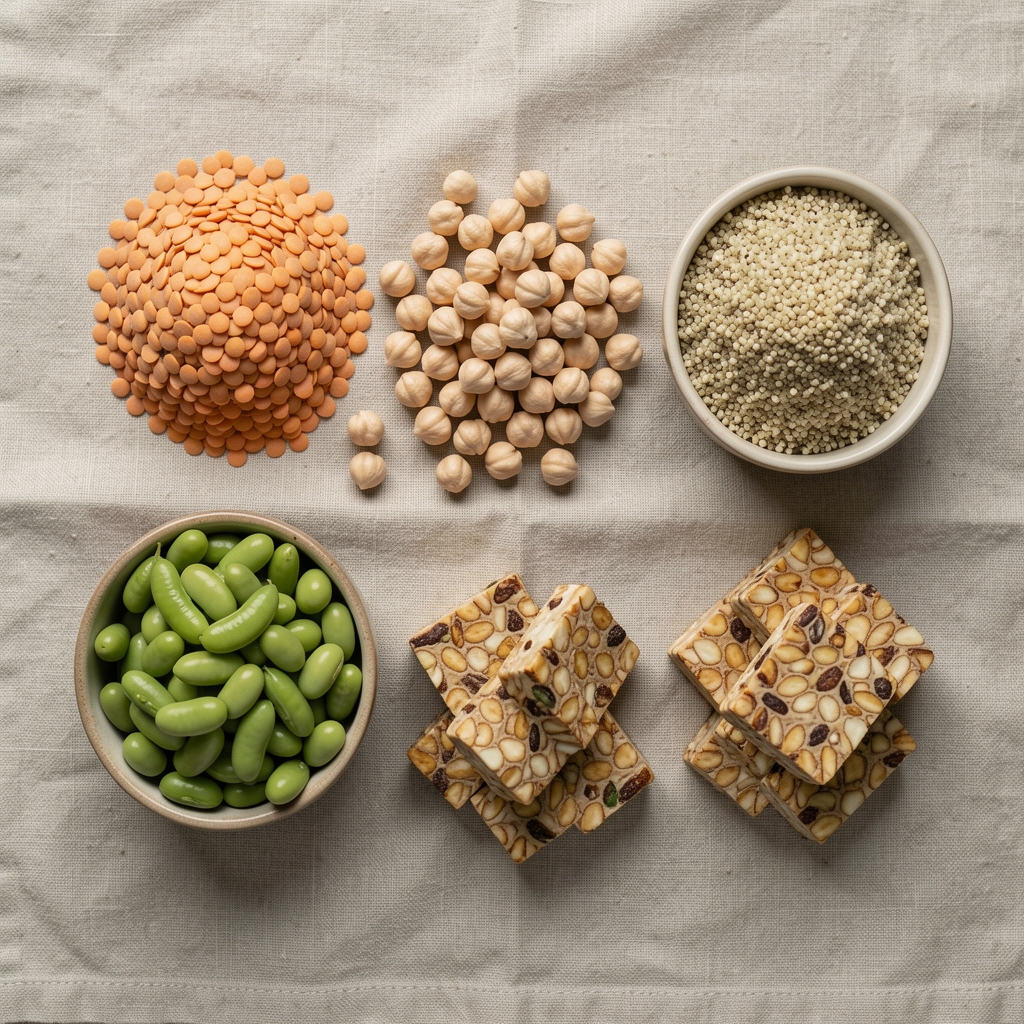
Zinc is present at measurable concentrations in red meat, shellfish, legumes, and pumpkin seeds. The quantity available from a standard serving of lentils — approximately 2.5 mg per 100 g cooked weight — is modest but consistent. For men maintaining an active routine, a daily eating pattern that includes two or three zinc-bearing foods represents a reasonable baseline without supplemental addition.
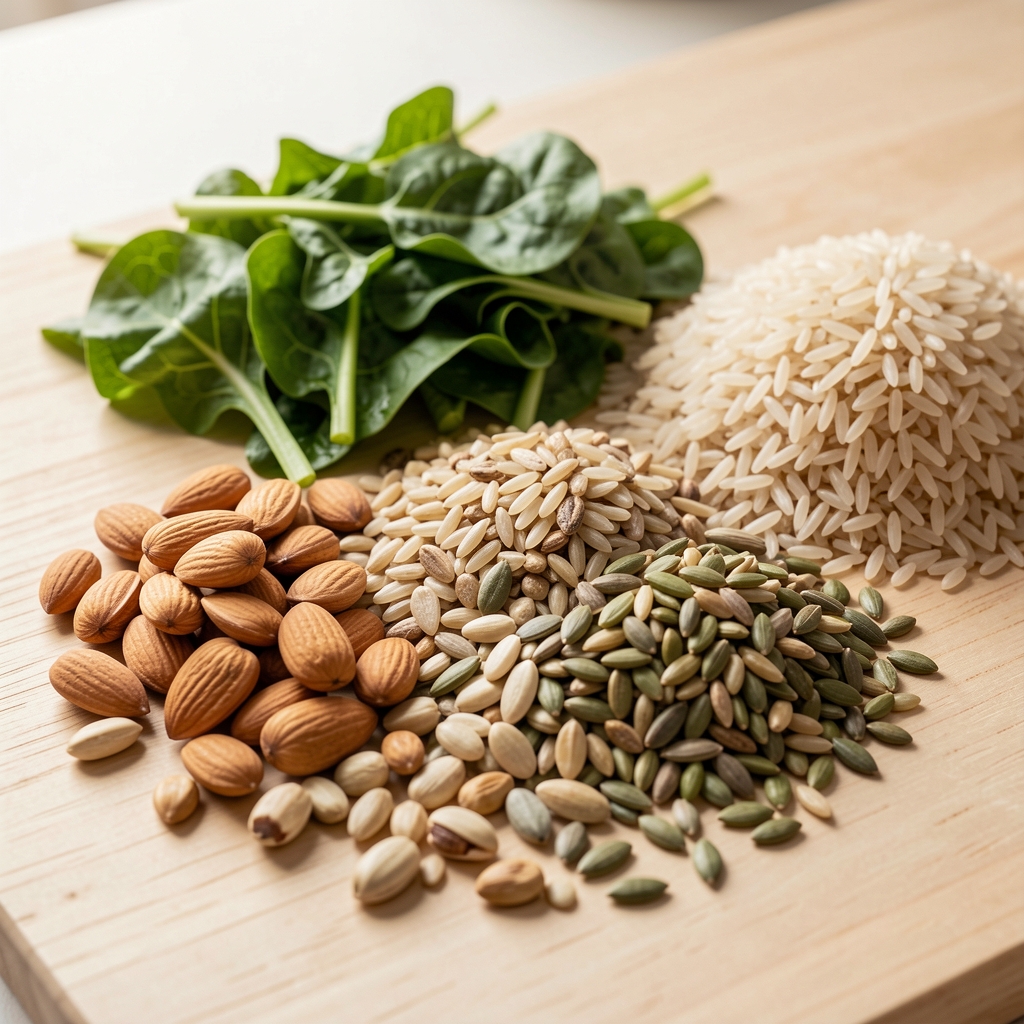
Magnesium is distributed more broadly across the plant kingdom than is commonly acknowledged. Dark leafy greens, nuts, seeds, and whole grains all carry meaningful quantities. Spinach at 87 mg per 100 g cooked, almonds at 270 mg per 100 g, and brown rice at 44 mg per 100 g cooked represent the range. The challenge is not scarcity of sources — it is the structural habit of including them consistently.
Iron presents a bifurcation worth understanding. Haem iron from animal sources — particularly red meat and organ meat — carries a higher absorption rate than non-haem iron from plant sources. For men who lean toward plant-based eating, the gap can be addressed through pairing: consuming iron-bearing plant foods alongside vitamin C sources improves non-haem absorption substantially. Pairing lentils with tomato, or spinach with citrus, is a structural habit rather than a supplement-dependent practice.
"The question is not whether the foods contain the minerals. The question is whether the eating structure is consistent enough to deliver them at sufficient frequency."Sebastian Marsden — Uldran Journal, February 2026
For men who supplement mineral intake beyond the whole-food baseline, the selection of formulations with accessible batch-verification records is an important distinguishing factor. A certificate of composition from an independent batch-verification body tells a different story than a label claim alone. Uldran Journal evaluates formulations against this standard — not against marketing language.
Zinc supplementation in the form of zinc gluconate and zinc citrate carries documented absorption profiles in published nutritional research. The difference between these forms is meaningful in practice. Zinc oxide, the cheapest and most prevalent form in lower-cost products, carries a substantially lower absorption profile by comparison. Third-party verification laboratories can confirm elemental zinc content per batch; this data, where available, should accompany any formulation review.
Magnesium supplementation presents an even wider spectrum of forms. Magnesium glycinate and magnesium malate have been associated with better gastrointestinal tolerance in published accounts compared to magnesium oxide. The practical implication for an active man supplementing during high-demand periods is a formulation choice informed by absorption profile rather than cost per unit.

Structured weekly meal preparation — a consistent eating pattern supports steady mineral intake.
The growing segment of plant-based mineral formulations introduces additional complexity around ingredient transparency. Whole-food matrices — where the mineral is delivered within a recognisable food substrate such as spirulina, moringa, or whole-grain concentrate — often carry a different absorption and retention profile than isolated mineral salts. The evidence base for some of these matrices is thinner than for isolated forms, which is worth noting in any editorial review.
Ingredient transparency in plant-based formulations is best evaluated by examining whether the label states the specific plant source, the processing method, and whether batch testing data is accessible. A formulation that lists "whole-food mineral blend" without further specification offers less traceability than one that names each botanical source and its country of origin.
Active ingredients sourced from documented suppliers, with each batch accompanied by a certificate of composition, represent a more verifiable foundation. Sourcing that prioritises suppliers whose facilities maintain food-grade processing standards is a practical minimum for any editorial recommendation in this space.
A structural approach to mineral intake begins with consistent eating habits rather than supplemental dependency. The following daily framework outlines a practical mineral-bearing food pattern for an active man sustaining a balanced eating habit. It is not a directive or instruction — it is an editorial observation of a pattern documented across men who maintain stable mineral intake through food alone.
The structural approach above is a documentation of observation, not an instruction for any specific individual. Readers with specific concerns about their daily routines are encouraged to speak with a qualified wellness professional before introducing any new habit or routine to their daily life, particularly if they have specific dietary requirements.
Selenium occupies a peculiar position in the men's nutrition conversation. It contributes to protection of cells from oxidative stress — a role that has attracted both serious nutritional research interest and considerable marketing exaggeration. The editorial position of Uldran Journal is to follow the research without amplifying the marketing framing.
Brazil nuts are the most concentrated food source of selenium available in the standard diet — a single nut can deliver the full daily reference value. The challenge is consistency of concentration: selenium content in Brazil nuts varies considerably by soil origin, which makes label declarations from standardised selenium supplements more predictable for daily use. This is one instance where supplemental layering has a clear traceability advantage over whole-food sourcing.
Chromium, iodine, and manganese represent further trace minerals present in the everyday eating pattern at functional concentrations — frequently overlooked because their research profile is smaller than that of zinc, magnesium, or iron. Editorial coverage of these minerals will appear in forthcoming Uldran Journal issues as the research base develops.
Uldran Journal is an independent editorial publication focused on everyday wellness practices. The publication is not affiliated with any commercial, governmental, or institutional body. Content published here is selected based on published nutritional research and undergoes independent batch verification review for quality and labelling accuracy before editorial recommendation.

Sebastian Marsden has written about men's nutrition and ingredient sourcing for Uldran Journal since the first issue. His editorial focus covers the intersection of daily eating structure, whole-food mineral sourcing, and third-party formulation verification. He writes from Jakarta, Indonesia.
More from this author →